
Checking Lincoln Parish Criminal History
Start by deciding which question the record must answer. The Lincoln Parish Detention Center roster shows present custody. It does not establish the filed charge or final result. The Clerk of Court Criminal Department holds citations, indictments, arraignments, minutes, dispositions, and sentences for Third Judicial District Court cases. A person reviewing a statewide identity-linked history should use the Louisiana State Police fingerprint-based Right to Review process.
Gather a full legal name, prior names, date of birth, and an approximate event date before searching. A booking number, case number, arresting agency, or statute citation can resolve close matches. Keep a note of where each fact came from. Names and charge labels can differ between the arrest, booking, prosecution, and court-disposition stages.
- Check the live jail roster when the issue is current custody.
- Identify the arresting agency and request its incident narrative.
- Search Clerk Connect or contact the clerk after a case is filed.
- Compare the court disposition with the original booking charge.
- Use BCII Right to Review when an official personal state history is needed.
Three Lincoln Parish Record Counters
Lincoln Parish records are divided among three Ruston destinations. The courthouse at 100 West Texas Avenue houses the clerk and the Third Judicial District Court record. The Public Safety Complex at 161 Road Camp Road is the right start for sheriff incident reports, crash reports, warrant questions, and written public-record requests. The detention center at 170 Camp Road controls present booking, bond, housing, and release information.
Clerk Criminal Department
100 W. Texas Ave., Ruston
318-251-5130
Filed cases and certified court copies
Sheriff Records
161 Road Camp Rd., Ruston
318-251-5111
records@lpsheriff.org
Detention Center
170 Camp Rd., Ruston
318-255-4440
Custody, booking, bond, and release
The sheriff’s official site shows the parish’s main law-enforcement channels.

Its navigation helps separate jail information from reports and public-record requests. The nearby street names can be confusing, so confirm the destination before visiting.
Louisiana Official Background Checks
The Louisiana Department of Public Safety and Corrections, Office of State Police, Bureau of Criminal Identification and Information is the central repository. Louisiana has no unrestricted public name-search product like those offered in some states. Authorized name checks use BCII forms. A person seeking a complete review of their own Louisiana record should follow the fingerprint and Right to Review instructions.
The current general authorization form lists $31 for a state check, including the technology fee, and $12 more when FBI processing is authorized or required. BCII describes livescan and Fast Fingerprint Retrieval sites, as well as accepted ink-card routes. No general-public IdentoGO site was verified in Lincoln Parish. Confirm the correct capture method before paying or mailing a card.
| Check | Use | Published amount |
|---|---|---|
| Louisiana state check | Authorized BCII process | $31 |
| FBI processing add-on | When authorized or required | $12 |
| Personal review | Fingerprint-based Right to Review | Confirm with BCII |
From Camp Road to BCII
An arresting officer creates an incident and arrest report. Detention staff then make a distinct booking record, take fingerprints and a photograph, inventory property, and track charges and bond. Reportable fingerprints and arrest details move to BCII. Prosecutors decide what to file, and the clerk opens the court case. The disposition must later return to the repository so it can be paired with the arrest cycle.
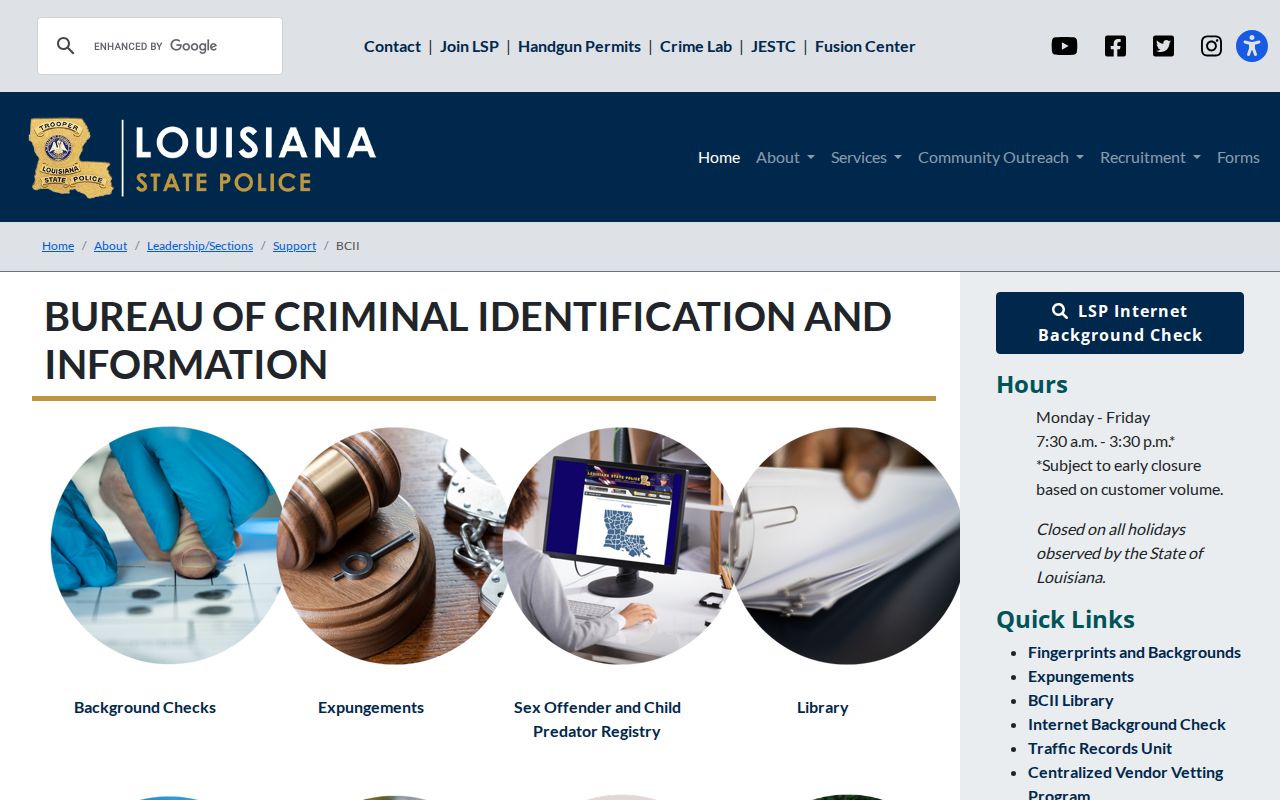
The BCII overview explains the state repository’s role.
This flow explains why a name search, jail roster, court docket, and fingerprint report can disagree for a time. A no-result answer from one source does not prove that no record exists.
Timing is only one source of mismatch. The booking charge records the legal basis accepted at intake, while the district attorney may file a different count after reviewing the report. A court can later dismiss a count, accept a plea to an amended offense, or enter an acquittal. The clerk’s disposition is therefore the best public source for what happened in the filed case. BCII remains the right office for the identity-linked state history, but its result depends on agencies reporting and matching the outcome to the correct arrest cycle.
Criminal Record Types
Each Lincoln Parish record reflects one stage or legal function. Police narratives state what officers reported. Booking files describe detention intake. Court minutes and judgments show what prosecutors filed and what the judge or jury did. A BCII history links reportable arrest cycles to reported dispositions by identity. Registry and supervision entries serve separate public-safety and correctional roles.
Do not merge these products into one assumed story. An initial allegation can be declined, amended, dismissed, tried, or resolved by plea. Custody can end before a court case closes. A warrant may be sealed or may come from a city court rather than Third Judicial District Court.
- Arrest and booking records identify the arresting office, intake, alleged charge, bond, and custody status.
- Criminal court files contain filings, minute entries, dispositions, and sentences.
- State histories tie fingerprint-supported arrest cycles to reported outcomes.
- Warrants may sit with the issuing court and serving agency.
- Supervision and registry records document distinct statutory duties or correctional status.
Lincoln Parish Custody Tools
The official inmate roster is the best first check for someone presently held at the Lincoln Parish Detention Center. The sheriff’s weekly arrest-report page is meant to add a recent snapshot, but the inspected page currently says “Coming soon.” When the weekly page has no usable entry, call the detention center, check the live roster, and then follow the case to the clerk after prosecution begins.
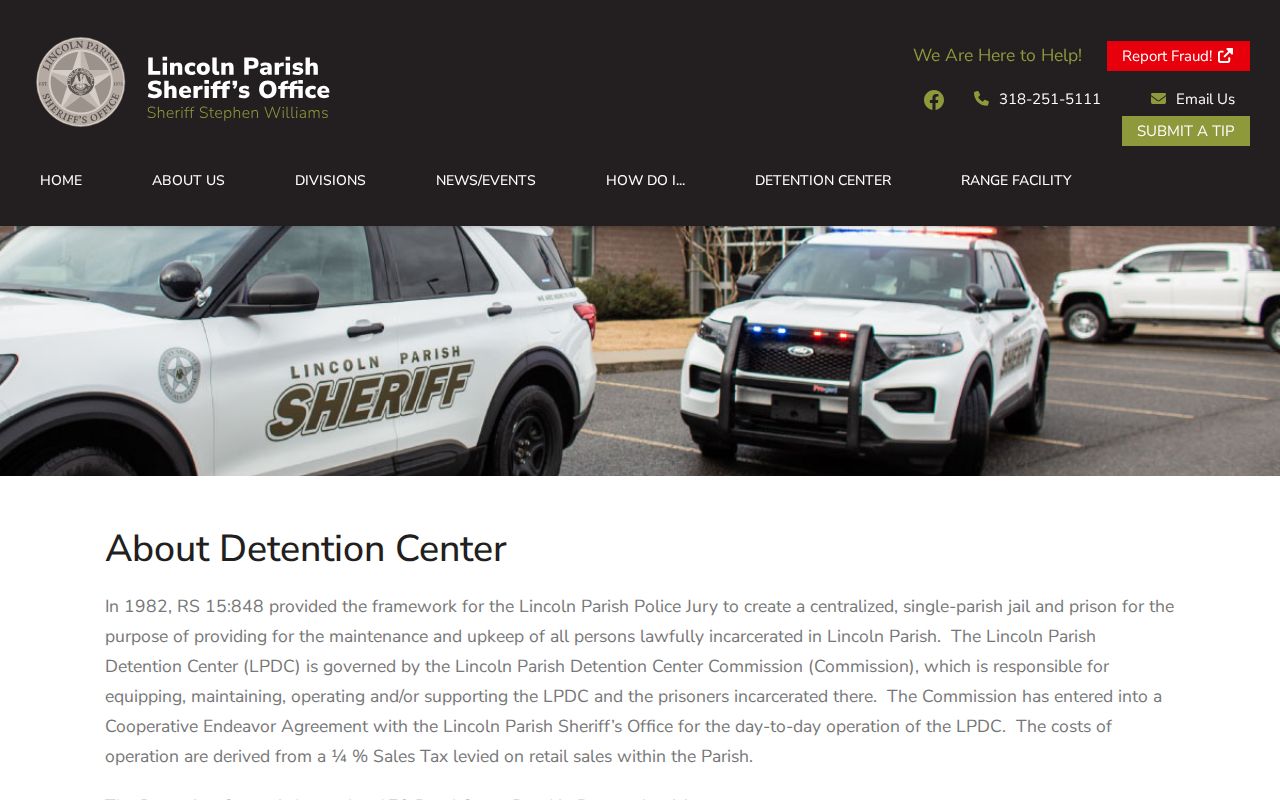
The detention-center page introduces the facility and its services.
For state custody or notification, use LA VINE or the DPS&C Imprisoned Person Locator phone service at 225-383-4580. Federal custody belongs in the Bureau of Prisons locator, not the parish roster.
Custody data changes fast. A missing name may reflect release, transfer, spelling, or a delayed update. It does not show that an arrest was erased or a charge dismissed. Record the booking and arresting-agency fields while the entry is available, then use those identifiers when asking for the narrative and court file. LA VINE can support notifications and state custody checks, but the originating jail or DPS&C should confirm urgent status questions.
Inside a Lincoln Parish Criminal Record
A complete review matches identity fields with events and outcomes. Look for names and aliases, date of birth, agency identifiers, arrest date, booking number, charge text, statute number, docket number, minute entries, disposition, and sentence. A court record may also show bond actions, counsel, hearing dates, probation, or a later revocation proceeding. Protected identifiers and victim details may be removed from public copies.
| Name & Identifiers | Names, aliases, birth data, and agency or state numbers used to distinguish people. |
|---|---|
| Arrest / Booking Data | Agency, event date, intake number, alleged offense, bond, and release details. |
| Charges & Statutes | The filed count and Louisiana law cited, which may differ from booking text. |
| Disposition | Dismissal, plea, acquittal, conviction, or another final action. |
| Sentence | Custody, fine, probation, credit, and court-ordered terms shown in the judgment. |
| Custody / Supervision Status | A time-sensitive jail, prison, probation, or parole entry that needs current confirmation. |
Clerk Connect and Counter Searches
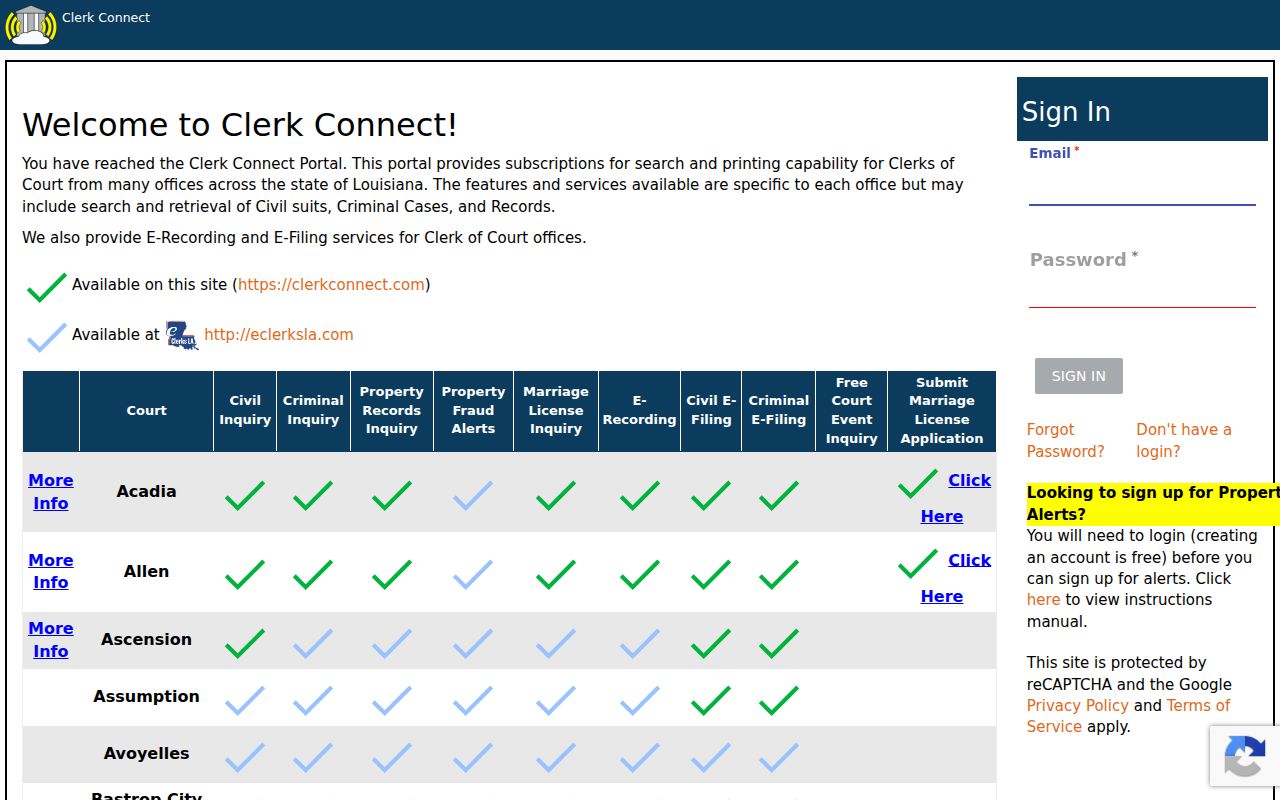
Lincoln Parish participates in Clerk Connect, a subscription system for participating clerks. Record sets and image access depend on the parish and account. It is not a free statewide trial-court database. The clerk’s Criminal Department also advertises a $20 criminal-background search at the courthouse. Call 318-251-5130 to confirm the current method and whether a certified copy or broader file search carries another cost.
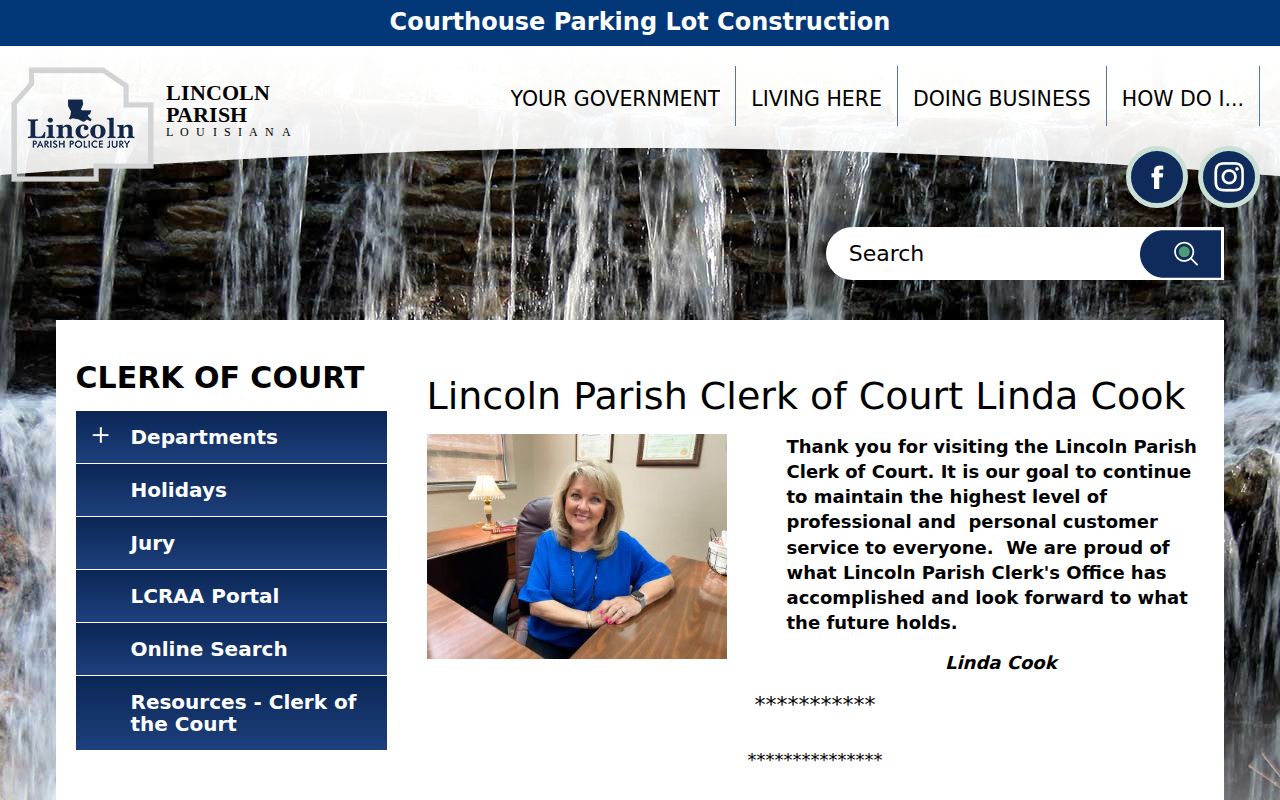
The Lincoln Parish Clerk landing page maps the local departments.
The subscription portal provides the remote route.
Use the clerk’s file for the filed charge and outcome, then request certified copies when an official court document is required.
Fine questions follow a different path. The clerk’s criminal page directs them to the sheriff at 318-251-5120. Federal dockets, Ruston City Court matters, and a Grambling or Choudrant municipal citation also sit outside the ordinary Third Judicial District search. Ask the clerk to confirm jurisdiction when a name search returns nothing but the event clearly occurred. The correct tribunal is often more important than another spelling attempt.
Public Access Laws in Louisiana
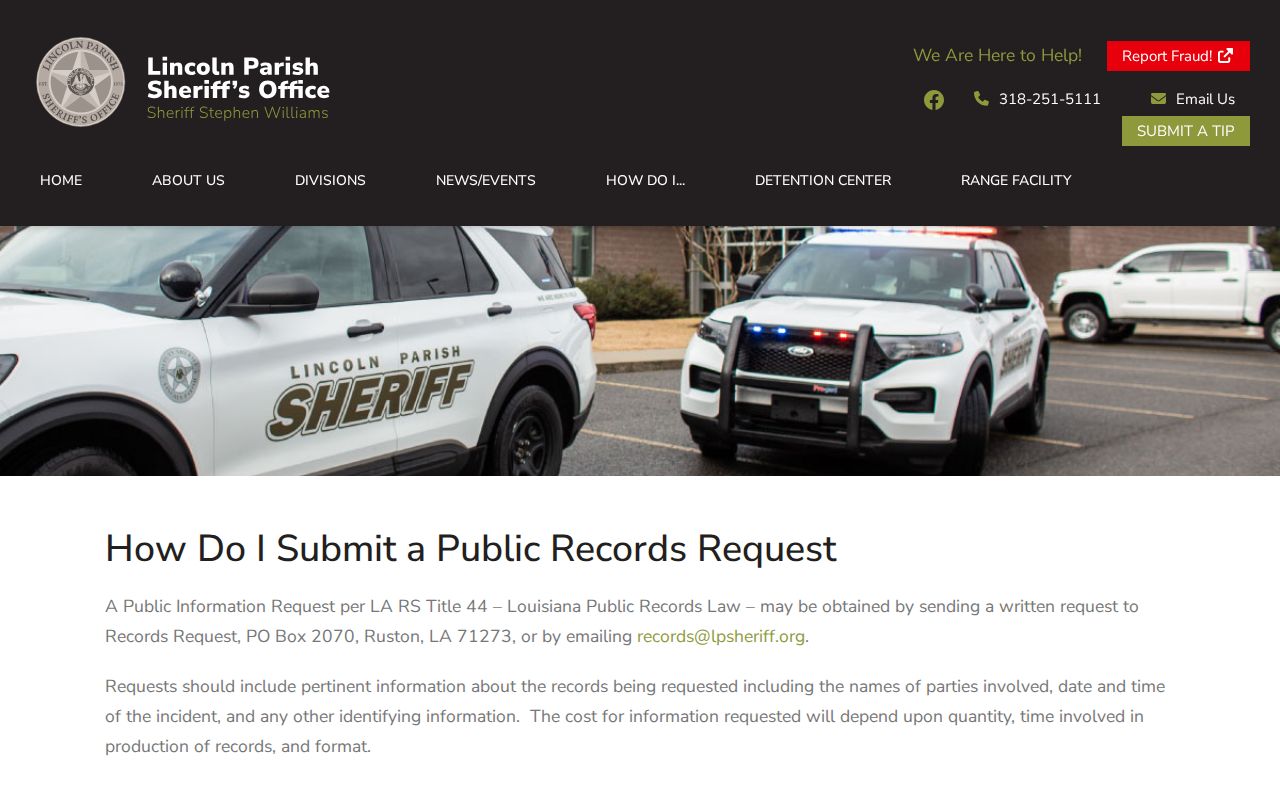
The Louisiana Public Records Law generally supports inspection and copying of public records, subject to exemptions, redaction, custody, and practical production rules. Lincoln Parish Sheriff requests must be written and can go to records@lpsheriff.org or “Records Request,” P.O. Box 2070, Ruston, LA 71273. Give the parties, date, location, report number, and exact components sought. Ask for the legal basis when material is withheld.
Key Statutes:
R.S. 15:542.1.5 establishes and governs the state sex-offender registry.
R.S. 15:578 addresses BCII collection, storage, identification, and dissemination.
Code of Criminal Procedure art. 971 explains Louisiana expungement policy and effect.
Written Requests to the Sheriff
The sheriff’s request instructions confirm the written Title 44 route.
Ask separately for the initial incident report, supplements, CAD log, 911 audio, photographs, crash diagram, or body-camera media. Those items may follow different retention, review, fee, and exemption rules. For a sheriff crash report, the agency publishes a $10 charge and says it is ordinarily available ten days after the event. Include the parties and the event date, time, and place.
If another police department made the arrest, send the narrative request there. Booking at the parish jail does not transfer ownership of a Ruston, Grambling, Choudrant, Louisiana Tech, Grambling State, or State Police report.
Describe the record, not merely the event. A request for “everything” can slow review and obscure what is most useful. Name the incident report first, then list any supplement, dispatch log, audio, photograph, or video separately. Request electronic delivery and a cost estimate for large or media-heavy productions. When an office redacts or withholds material, ask which legal provision applies and whether the nonexempt portions can still be released.
Sealed, Expunged, and Restricted Records
Louisiana expungement removes a qualifying arrest or conviction record from ordinary public access, but it does not destroy the record. Criminal-justice agencies and other bodies named by statute may retain access. Juvenile material, protected victim information, sealed warrants, and active investigative content also do not follow the same access rules as an ordinary adult closed case.
Lincoln Parish filings begin with the clerk. The published local total is $550, allocated among the Louisiana Bureau of Criminal Identification and Information, the arresting agency, the district attorney, and the clerk. The clerk says all payments must be ready when the petition is filed and does not provide technical or legal help preparing it. Eligibility and waiting periods depend on the offense and outcome.
The clerk’s expungement page states the local filing terms. A cleared public result should not be treated as proof that every authorized agency copy ceased to exist.
Warrants and the Lincoln Sheriff App
No complete, guaranteed real-time Lincoln Parish warrant database was verified on the public website. Call the sheriff at 318-251-5111, check the issuing court, and use a focused records request when disclosure is lawful. City bench warrants may sit with a municipal court. Sealed and unexecuted investigative warrants may not be public. A person who may have an active warrant should seek legal advice about a safe resolution before appearing unexpectedly.
The official Lincoln Sheriff iOS app advertises tips, crime reporting, news, alerts, and interactive features.
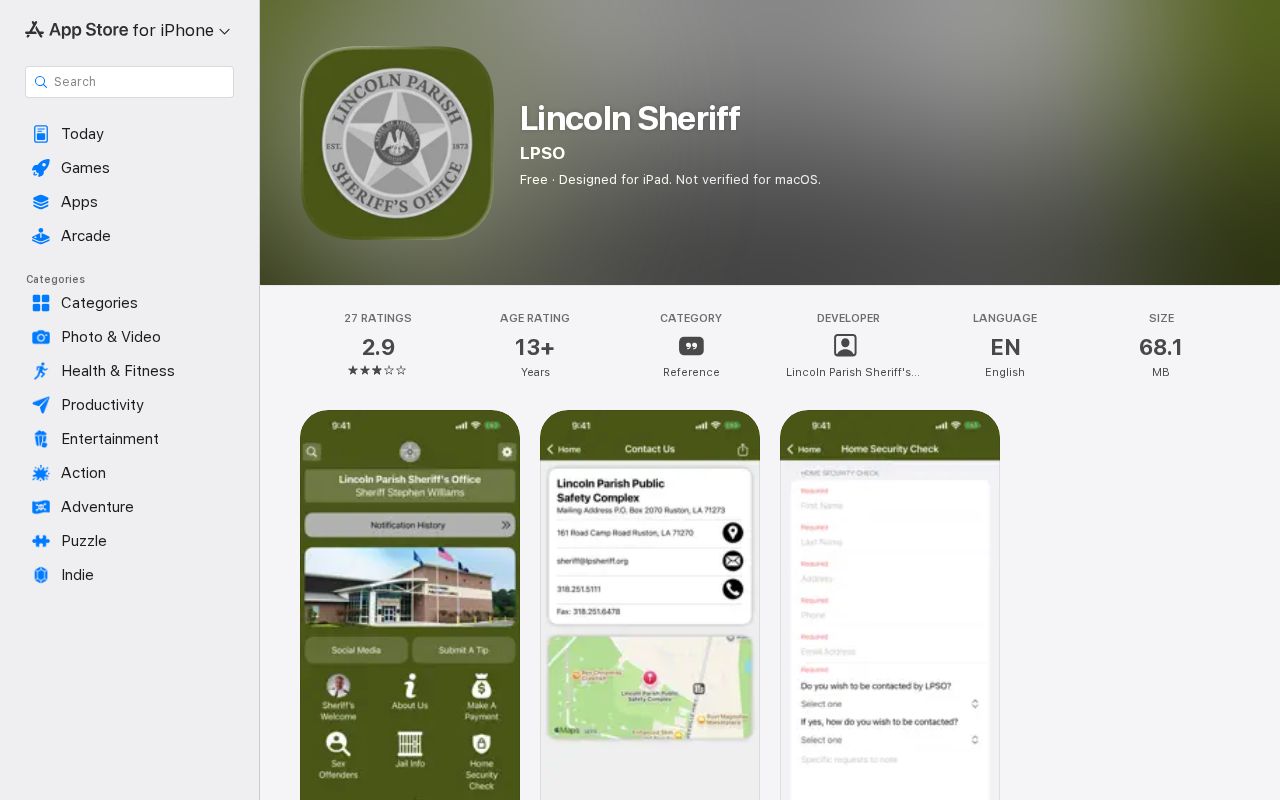
Many useful tools also appear on the sheriff’s website, so no function should be assumed app-only without checking the installed version. Emergency reporting still belongs with 911.
Federal Records for Lincoln Parish
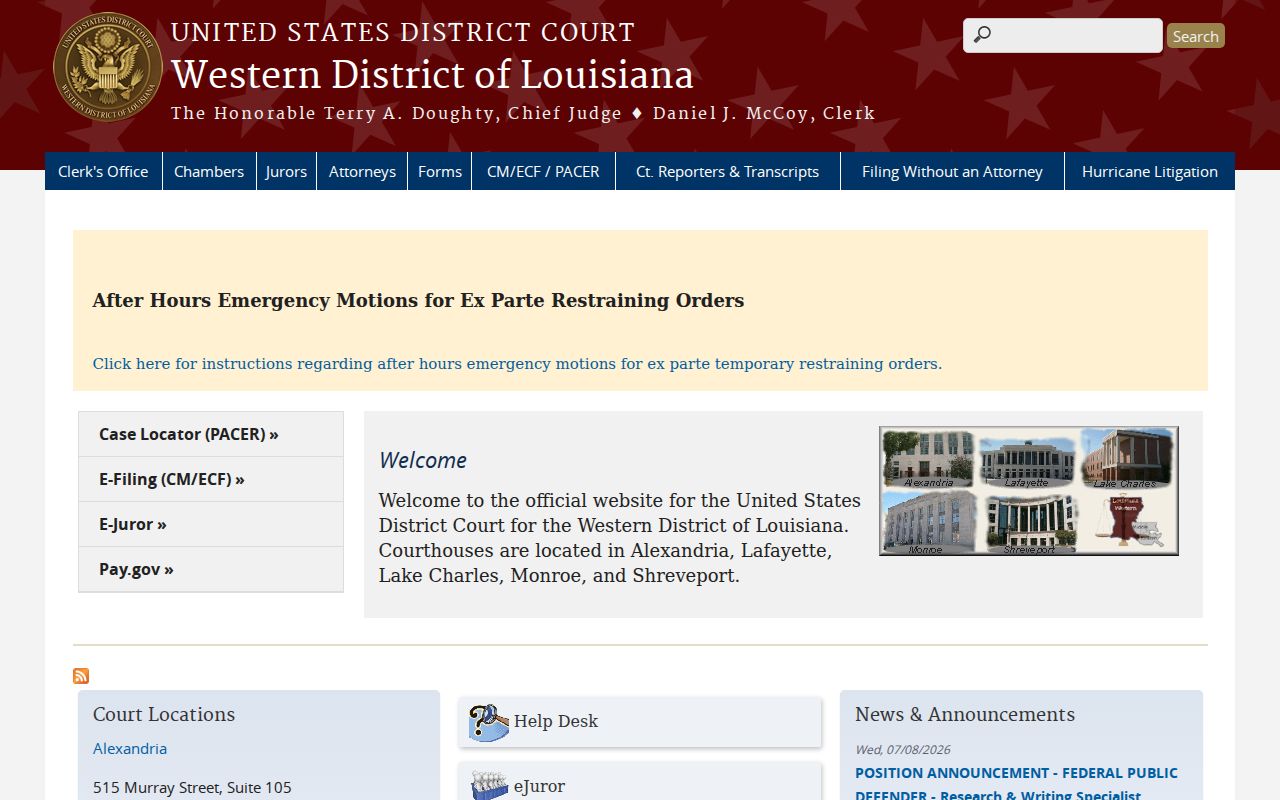
Federal criminal cases are separate from parish court files. Lincoln Parish lies in the U.S. District Court for the Western District of Louisiana. Search federal dockets through PACER, and use the Bureau of Prisons locator for federal custody. Neither source replaces a Third Judicial District Court search or the parish inmate roster.
The Western District’s official site identifies the correct federal trial court.
A person reviewing their own nationwide FBI Identity History Summary uses the FBI process, which is distinct from PACER’s court dockets and BCII’s Louisiana record review.
Lincoln Parish Criminal Records by City
Ruston, Grambling, and Choudrant are the three largest incorporated places by the 2024 Census estimates used in the research. Their police departments create local incident records, while city or mayor’s court files may hold ordinance and traffic matters. Felony prosecutions converge at Third Judicial District Court, and parish bookings converge at the detention center. Campus police at Louisiana Tech and Grambling State remain independent custodians.
Ruston Criminal Records
22,330 · RPD, Ruston City Court, and Louisiana Tech Police use distinct channels.
Grambling Criminal Records
5,278 · City police and GSU Police are separate custodians.
Choudrant Criminal Records
1,028 · Village Hall is the direct-contact records fallback.
Review Your Own Louisiana Record
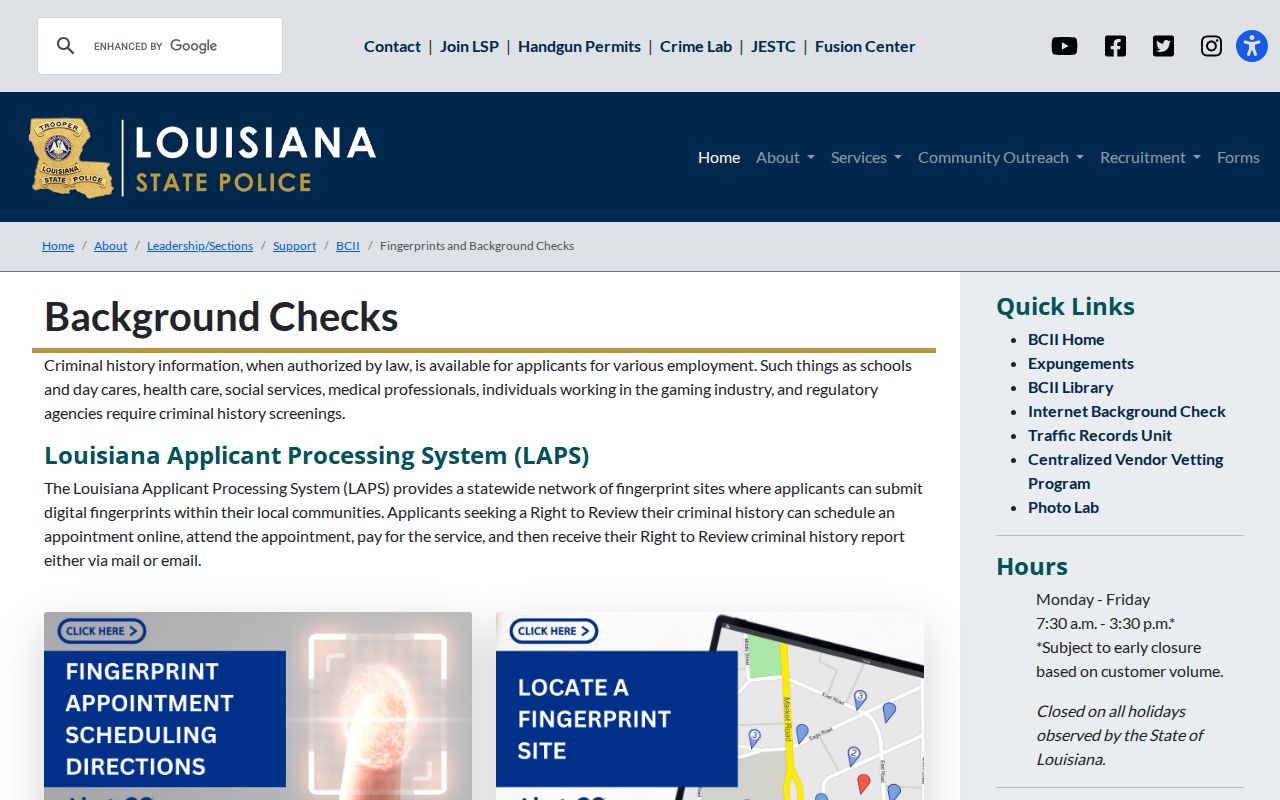
For identity certainty, follow the State Police fingerprint-based Right to Review route. Fingerprints reduce the risk of confusing people who share a name. Review the returned arrest cycles and dispositions against certified Lincoln Parish court records. If a result appears incomplete, first identify whether the mismatch sits in the arresting-agency report, clerk disposition, or state repository entry.
The LSP fingerprint page is the controlling source for current forms and capture options.
Keep copies of the fingerprint submission, the court disposition, and any correction correspondence. Official requirements and fees can change, so confirm them with BCII before submission.